01 · Product overview
An end-to-end AI front-desk product.
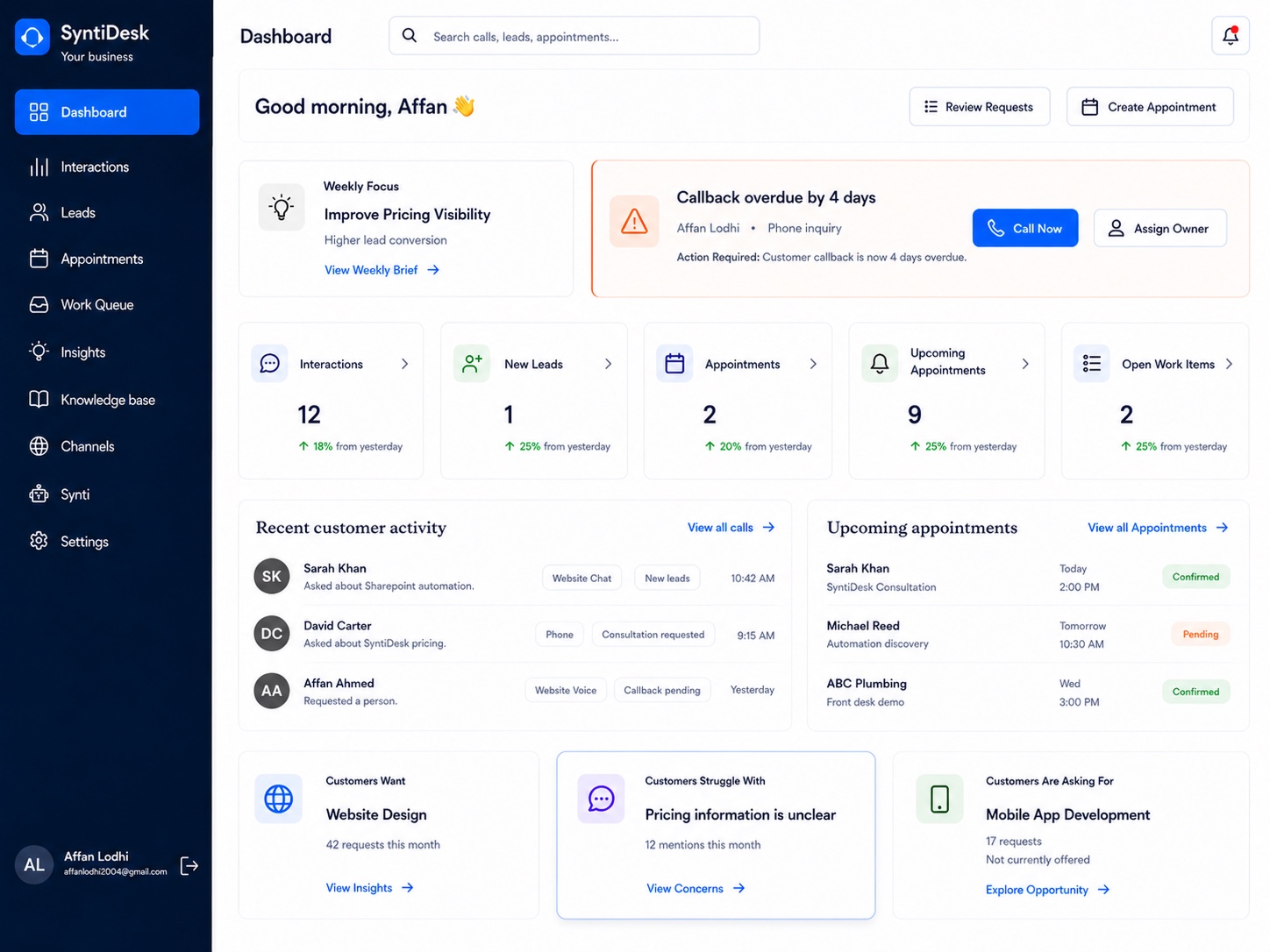
SyntiDesk is designed to bring customer conversations, lead follow-up, appointments, operational work, approved business knowledge, and conversation-derived business insight into one coherent experience.
02 · Product challenge
Conversations are only useful when the business can act on them.
Customer communication often becomes fragmented across channels and follow-up tools. The product challenge was to create a shared operating view: preserve conversation context, identify what needs attention, and connect customer intent to the next human action.
Core product principle: one approved business configuration supports every customer channel, while the same interaction history becomes operational context and business insight.
03 · Role and ownership
From product definition through implementation oversight.
I conceived SyntiDesk and led the experience from initial strategy through UX/UI design and product development. My work covered product definition, information architecture, interaction design, visual direction, prototyping, AI-assisted asset creation, and implementation oversight.
Figma was used to structure and test the product experience. Codex and OpenArt supported development and asset creation under my product direction and review.
04 · Early Design Exploration / Wireframes
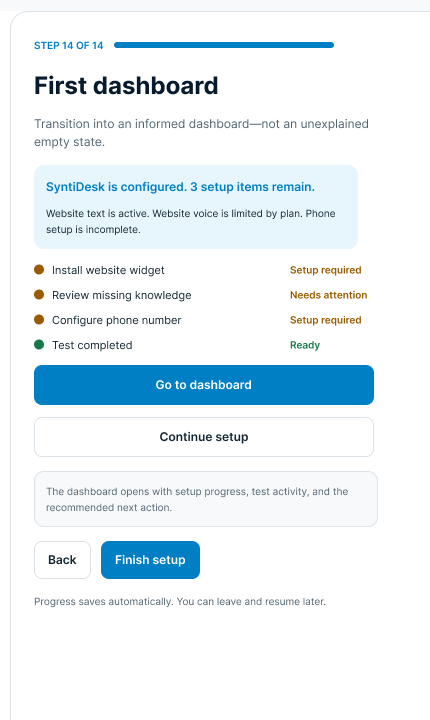
Making readiness explicit before activation.
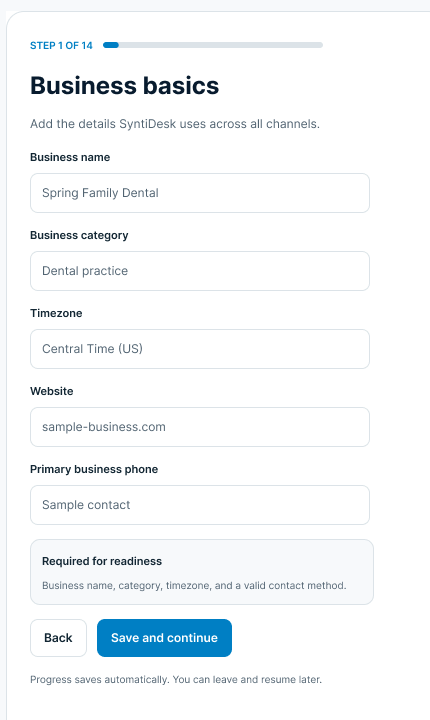
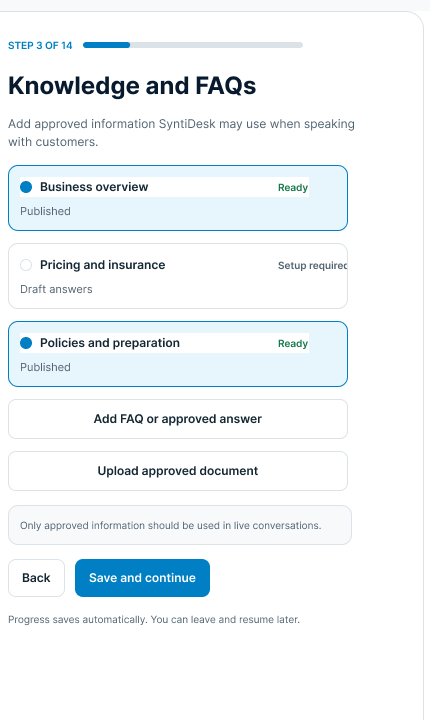
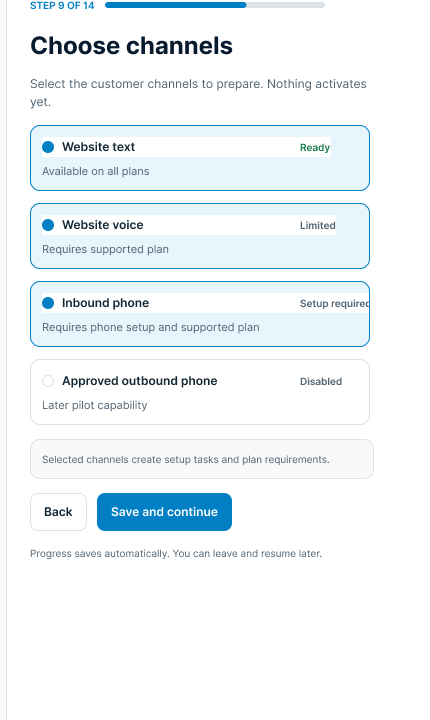
The early onboarding exploration organized business setup into visible steps: basic information, services, approved knowledge, customer qualification, appointment behavior, escalation rules, channels, and readiness checks.
05 · One product model across channels
Shared knowledge and history, not three disconnected tools.
Website chat, website voice, and phone interactions use the same product model. This creates a consistent place for approved business context and gives staff one chronological record to review instead of separate channel histories.
06 · Unified interaction management
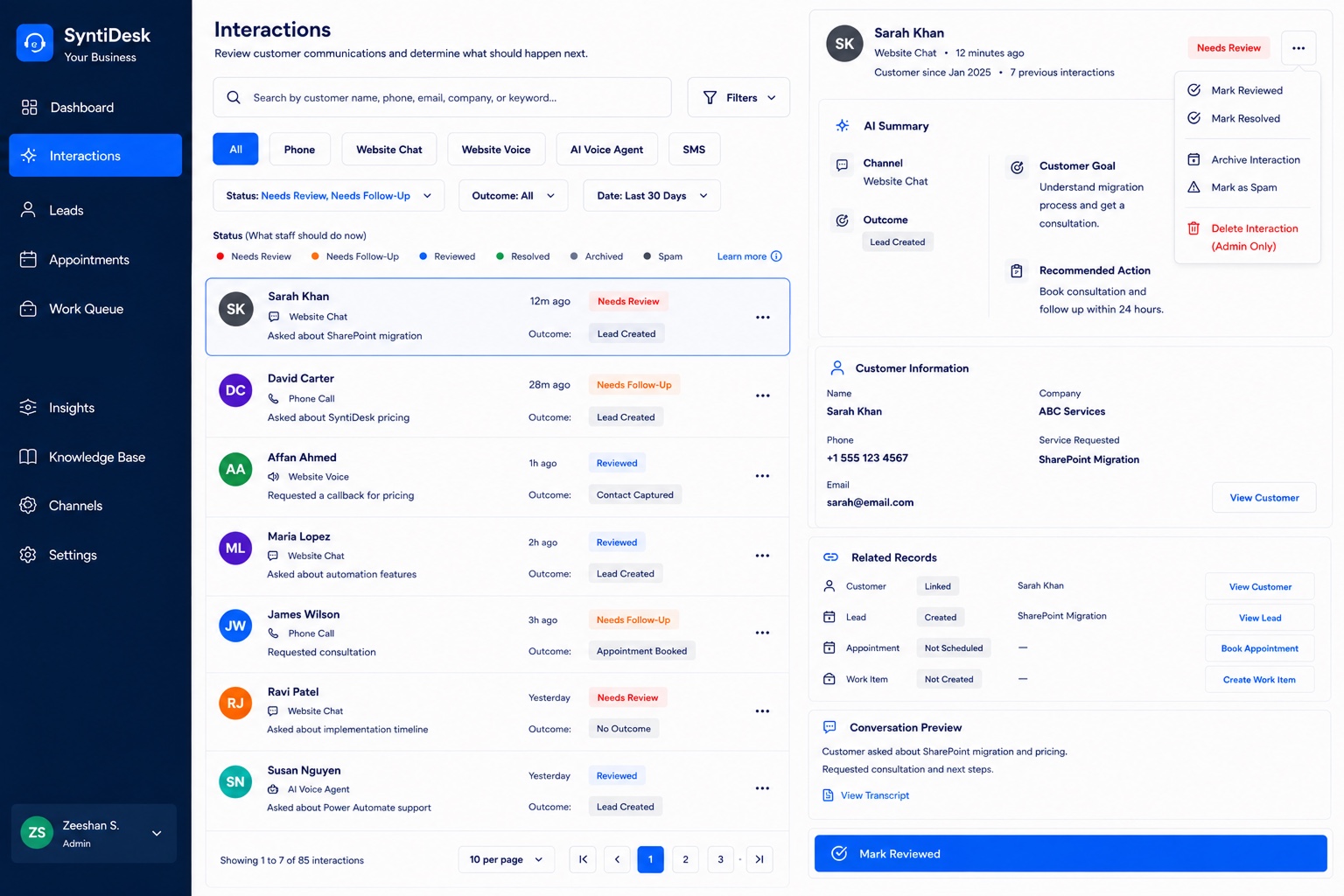
Context, outcome, and attention status in one view.
The unified interaction experience lets staff scan conversations chronologically, understand the channel and customer need, and identify records that require review or follow-up.
07 · Human control and operational follow-up
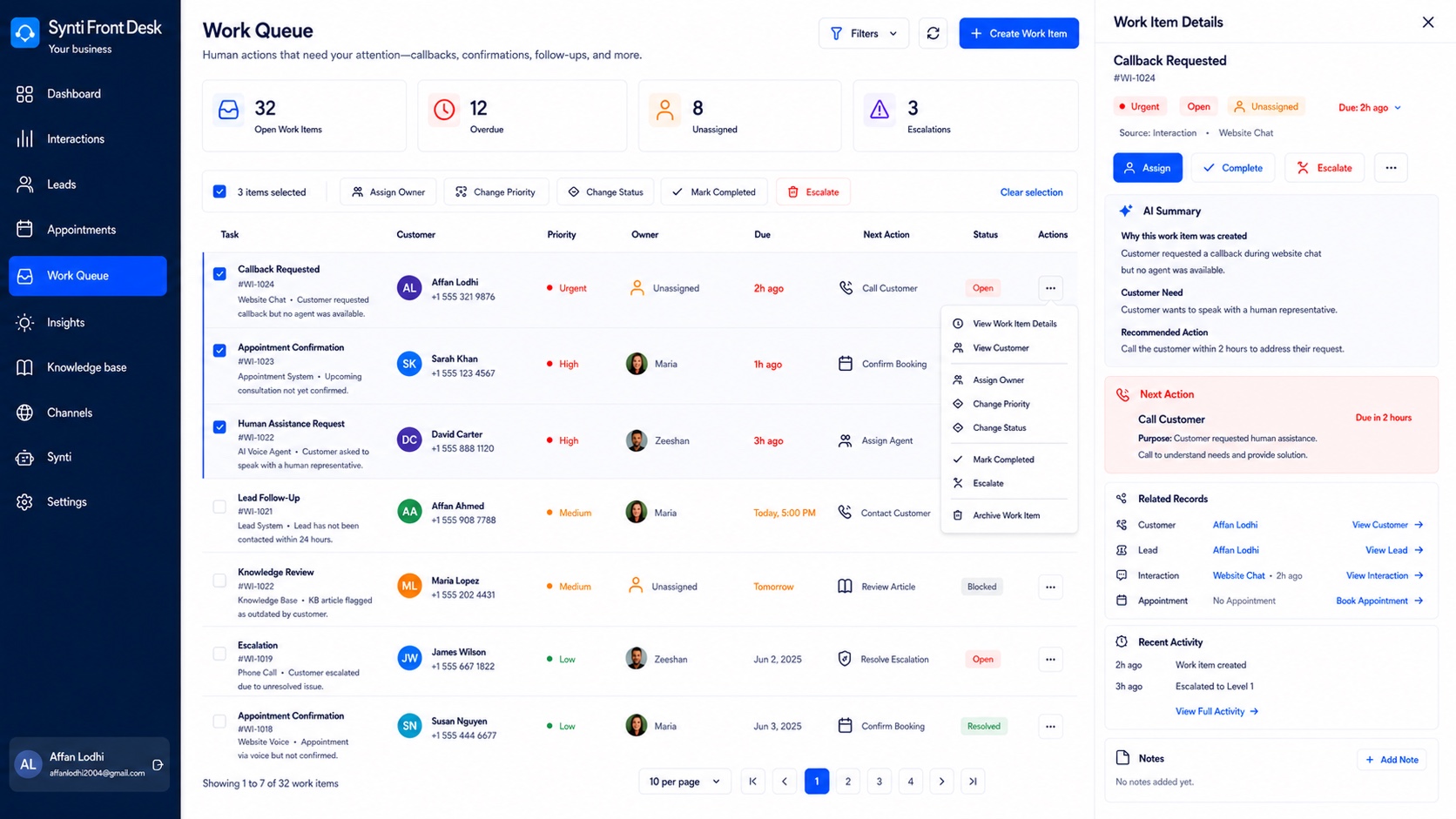
Keep responsibility visible.
The Work Queue organizes follow-up items, ownership, priority, due state, and next action. It supports human review and escalation without implying automated outbound calls or live call transfer.
08 · Approved knowledge and AI guardrails
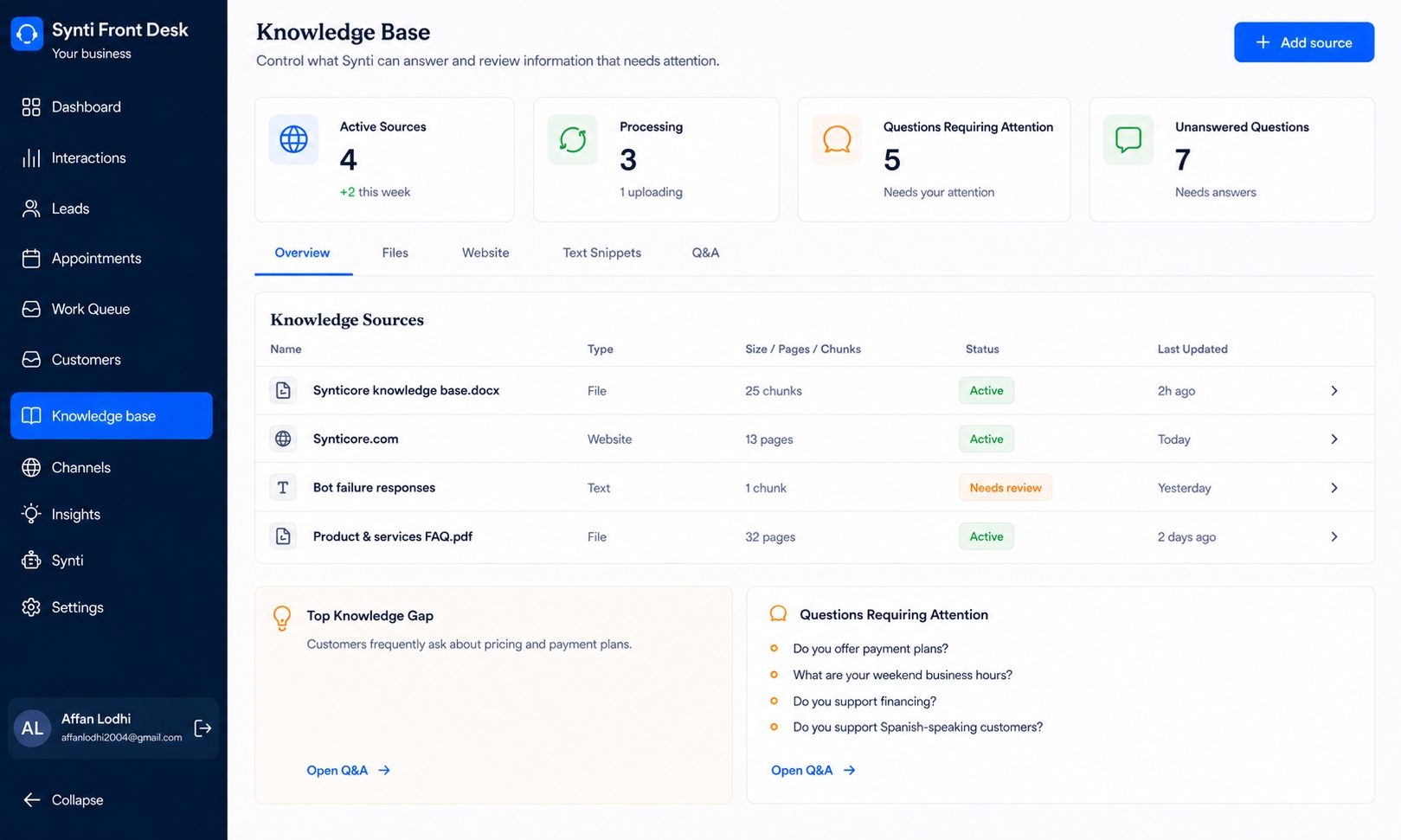
Make the source of an answer manageable.
The Knowledge Base gives the business a place to manage approved source material and see questions that still need attention. The design keeps human review visible instead of treating AI responses as a black box.
09 · Conversation-derived business insight
Turn repeated conversations into a clearer business signal.
The implemented Weekly Business Brief and insight experience brings together interaction, lead, appointment, and work-item data to surface themes, concerns, opportunities, and recommendations. Illustrative product values are not presented as customer outcomes or production performance.
10 · Current product status and boundaries
A working product, described without overreach.
Currently implemented
- Unified dashboard and interaction history
- Interactions, leads, appointments, Work Queue, and Knowledge Base
- Weekly Business Brief
- Website chat and voice; phone interactions
- AI summaries and customer or lead capture
- Human review and escalation
Confirm before describing as fully live
- Automatic rescheduling and SMS reminders
- Automated outbound calling or live human call transfer
- CRM or third-party calendar integrations
- Advanced recommendations operating end to end
11 · Reflection and next priorities
The strongest product decision was coherence.
SyntiDesk’s value comes from connecting conversation, context, and action—not from presenting another isolated AI channel. The next priorities are to validate ambiguous feature states individually, continue accessibility and responsive QA, and add verified evidence only when it is available.